
We went out to eat both Thursday and Friday nights. The meals couldn’t have been more different. Each was eaten on a very rainy night. June and July constitute ‘tsuyu,’ or the ‘rainy season,’ and we’re resigned to getting wet for the foreseeable future.
Thursday night was dinner with the Notre Dame Club of Tokyo group. We all met at Mori No beer garden for ‘yakiniku.’ Apparently this type of meal is very popular. You pay a flat fee at the door (4,100 yen for men, 3,800 yen for women). For $40 or so, it’s essentially all you can eat for two hours between 7 and 9pm.
While it may seem a bit pricey for relatively basic fare, food prices in Tokyo are high as are beer prices. If you apply yourself, you can get your money’s worth and then some.
The beer taps are open. The waiters bring large trays of food (meat, vegetables, etc.) that are then thrown onto a large, very hot griddle in the middle of the table. It’s heated from underneath by a large propane tank. You then push the food around for a bit until it’s cooked and ready to eat.
The meal on Friday was at the Tokyo American Club (TAC as it’s known). It’s about a mile and a half away and is normally an easy walk. But with the rain we took the taxi both ways.
The restaurant is ‘modern elegant’ with attentive, personal service by the staff. Menus are presented on iPads. In addition to the list of appetizers, main courses, wine, etc., there are pages for cocktails and even Cuban cigars for after dinner. I remarked to Amy that it was ‘very civilized.’
The food was terrific in both locales, each with it’s own charm. Eating yakiniku is kind of like camping, while TAC is 180 degrees in the opposite direction. Either way, both meals were hard to beat.
The first photo is the odd man out, but I included it because of the non sequitur English blurb on the package. There’s a great love of American culture, and along with that a lot of English used on T-shirts, packages, ads, etc. Much of it, as is the case here, tends to make very little sense to a native speaker.
-
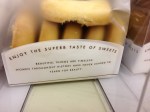
- Waiting for the ATM machine at 7-11, I was standing next to a selection of 7-11 brand cookies and treats. All of them had this slogan on the packages. Huh?
-

- The taps are open so drink away!
-
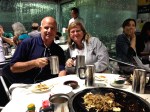
- I got there a bit late but they saved a mug for me.
-
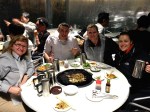
- The three on the right are US Navy; a doctor and two dentists.
-
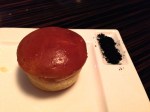
- The ‘bread’ was delicious and buttery. The black powder on the right is sea salt for dipping. It is infused with carbon (produced in Norway). Really.
-

- Amy had the scallops from Hokaido.
-
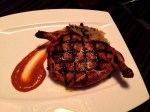
- I had the chicken (with perfect grill marks) and pilaf complemented by a delicious, spicy BBQ suace
-

- My starter was an onion soup served in a small copper pot. Delicious.
-

- Our appetizer. Scallops, crab puree, and tuna tar tar.


You must be logged in to post a comment.