Havana and Surroundings

Sabbatical (Part 3)

We left the friendly confines (go Cubs!) of West Palm Beach and drove south under the ever-watchful guidance of Waze. On I90, if you’re not the driver, it’s almost like an interactive video game…there are so many ways to interact with the app because of the stranded cars, slow traffic, and endless construction. I don’t think I’ve ever seen so many stopped and/or stranded cars than in South Florida.

It wasn’t too tough finding the port, and we accidentally drove there first before purposefully and bravely heading to Zika-infested South Beach to kill an hour or so. I expected the Art Deco feel of the place from everything I’ve read about the area, but it did seem a bit rougher than I imagined. The buildings, in pastel oranges and greens, were generally worse for wear. Historic is one thing. The buildings in Charleston are historic and much older, but seemed lovingly cared for.

Once we dropped off the rental car we hailed an Uber and headed to the boat. Our driver was a 40-something man whose family had fled Cuba when he was a niño. We asked him for recommendations of places to visit in Havana; the best restaurant or bar, etc. He was quick with his answer: ‘Floridita.’ He said it was a very famous watering hole both before and after Castro. We made a note and were directly deposited in front of our pier. The Fathom awaited.

The ship is small as cruise ships go. It holds hundreds instead of thousands. It has nine or ten decks and only a few restaurants with no casino in sight. The staff apart from the crew seemed to be entirely Indian and the service was excellent, friendly, and efficient. The food was good but would win no Michelin Stars. Our cabin was cozy but we had a nice balcony, and because of geography, our windows always faced the island as we floated around it. The shower worked great with decent water pressure. What more could a person want?

As we slipped out into the ocean (foreshadowing) to the strains of a British cruise ship band that was actually pretty good, it quickly became apparent that the Port of Miami is massive. Cruise ships were the least of it. Almost every pier held cargo ships from all over the planet, each piled high with thousands of containers filled with, no doubt, every type of product imaginable. As we crossed out into open water, I could briefly see the entire length of South Beach looking north. It was filled with sun bathers and  partiers; smaller commercial ships and myriad pleasure craft zipped along the waves of the Atlantic.

After a pointless night at sea (to provide for a more dramatic arrival in the morning, no doubt), we sailed slowly into the Port of Havana. From the outside decks we were close enough while in the channel to see the busses, taxis, and historic ’50s-era Fords and Chevy’s cruising the Malecón, the popular street and seawall that fronts Havana with the ocean to the north. There seemed to be a lot of activity…not too many cars but lots of people out walking along the water. From the ship the city is yellow and brown and green and looks old in a good, mysterious way.

When we finally docked, I could see the commercial piers peeking over the roof of the passenger terminal. Unlike Miami, it was not bustling. There wasn’t a single commercial ship in port. Behind us there was an oil refinery with a large chimney billowing a huge yellow flame and thick black smoke. The bad news was, the pollution was blowing freely across the landscape. The good news was, from almost anywhere in the surrounding area you could orient yourself by looking for the smoke and flame.

Because we were only the seventh American ship to visit Cuba since the embargo, our travels were still a bit constricted. Tour buses were ready and waiting, each with one or two Cuban guides, but by filling out some paperwork we had the option to wander away from the group. If we did choose to travel alone we were mandated to take notes as evidence of our cultural and educational experiences. Needless bureaucracy at its finest. Our guide was friendly and knowledgable, and was enthusiastic both for relating Cuban culture and history, and for meeting Americans. He confided that he learned English by watching many hundreds of bootleg Hollywood movies. His dream if he ever got to the U.S. was to eat a fresh McDonalds hamburger. His friend had eaten one, but only after it had made the 90-mile trip from Miami as a present from a returning relative. Never complain again if drive-through is slow.

Havana seems to be divided into the ‘Old Section’ and ‘Everywhere Else.’ And the Old Section is divided into places the tourists go (or where the tour guides take them) and places where Cubans actually live and work. The touristy areas are close to the port and easily accessible on foot. The buildings are clean and many of them completely restored. There are outdoor cafes and small displays of souvenirs like you would see at an art and wine festival. Some of the streets or squares are closed to car traffic and tourists and residents mix freely. If you’re a little more adventurous, all it takes is a detour of a few blocks and you quickly come upon the ‘real’ Havana. It’s old, crumbling, dirty, and stuck not in time, but in circumstances. There is no money, goods, or talent to bring these areas back to their former (considerable, I’m sure) glory.

The other two cities we visited, Cienfuegos and Santiago de Cuba were smaller than Havana, but each had their own flavor. Because they were off the beaten path for most tourists they were distinctly shabbier than the Capital…fewer cars in evidence and fewer stores and services.

The Cuban people are justifiably proud of their culture and heritage. There still seems to be an amazing amount of creativity there despite the fact that most of it is used to glorify Castro, Che, the revolution, and Martí (he’s around more places while dead than he ever could have been alive). And I will fight to the death anyone who says Cubans aren’t incredible singers and dancers; The Tropicana Club is proof of that. Unfortunately such talent and passion seem to be wasted. We were proudly told, ‘health care is free,’ but having seen the disrepair of the local hospitals, free might be dangerous. We were proudly told, ‘there is one hundred percent literacy,’ but to what end, if the only books one can read are hagiographies of the ‘great’ revolutionary leaders? We were proudly told, ‘there is no unemployment, everyone has a job,’ but everyone works for the State. The average wage is on the order of $300 per year. Even if it were a hundred times that, there would be nothing to buy. Most things of value, food included, are rationed.

So why did we choose to visit Cuba? We made a list of places that we thought would soon be changing, and we wanted to see them as they are now. Many of our fellow travelers said things along that line, but using the phrase,‘…Before it’s ruined.’ Well, it’s already ruined…it’s been ruined for a long time. And despite what some will say, that isn’t America’s fault. Almost every other country on earth has been trading with Cuba since the beginning of their revolution. Almost every country allows free travel back and forth to the island. Money has been flowing into that place for decades, and it hasn’t made a bit of difference for the average José. The disease of communism is the reason.

But as a destination with a great history, culture, architecture, and friendly people it is well worth the time to visit. Especially while the old Ladas and Chevy Bel Airs are still cruising the Malecón, being held together with bailing wire, duct tape, prayers, and the ingenuity of self-taught Cuban home mechanics. Even if you don’t get there right away it is inevitable that the lure of American culture and money will eventually ‘ruin’ the island with a chicken in every pot and a Starbucks on every corner. So be it; that kind of ruination would be a boon to the Cuban people and a small price to pay for freedom.

I’ve already prattled on too much…now for the photos.

Posted in Travel | Tagged , , | Comments Off on Havana and Surroundings

Cumberland Island

Sabbatical (Part 2)
When researching fun and interesting places to visit before our trip began, Amy remembered her cousin Holly telling her about Cumberland Island and Greyfield Inn. After a bit of looking around on the Internet Machine, we were booked for a few nights and ready to go…we just had to make it to a little dirt parking lot behind the railroad tracks in Fernandina Beach in time to catch the boat out to the island.

Everything about the place is relaxed; elegant and casual at the same time…things are unhurried but are done the right way. As is my habit, we got to the dock early. The boat captain, seeing our carry-on bags, told us we wouldn’t board quite yet but would get the bags on board and ‘why don’t you get a cup of coffee down the street…there’s a good place just on the left.’ Sound advice and we took it. Once on the boat there were only a few of us. A couple of employees, some boat crew, and two other couples; one staying for a few days like us and the other just for the day.

Cumberland Island has an interesting history, not the least of which was as a getaway for the ultra rich back in the days of robber barrons. Most of the island in question was owned by Thomas Carnegie, who worked closely with his brother Andrew Carnegie, to build what would eventually become U.S. Steel. So, having the stuff in fistfuls, Carnegie decided to buy most of the island and build ‘cottages.’

Only one of those cottages, Greyfield Inn, is still up and running. And interestingly is still run by descendants of the Carnegie family. It seems that Andrew Carnegie (like Gates and Buffett now) gave away most of his money during his lifetime and upon his death. Thomas was a little more traditional with his finances and left a great deal of money to his wife and children, but that soon disappeared.

The family of today only inherited the land and structures, and as they die off the land will revert back to the National Park Service bit-by-bit until none of it is left in private hands. But for now, the family continues to run the Inn as a business concern…no idle rich these days. And you won’t meet a nicer, more attentive bunch. The service and food were outstanding, people were welcoming and friendly (you are guests, after all, in their home)…and the sweet tea was the best I tried.

The other buildings, far grander than Greyfield, are either in ruins or have been converted to museums. But Greyfield itself is not what you’d initially think of if someone told you it was built by one of the richest men in the world. It isn’t covered with marble or gold. The walls are wood and plaster. There is no grand entrance or crystal chandeliers. Yes, it is quite large, but that was necessitated by needing room for servants and for the large family that would descend upon the island at holiday time. Think of it as 19th century glamping.

The house is obviously comfortable and beautiful, but it’s the property that really impresses. It is miles and miles of unspoiled, natural land covered in live oak trees and Spanish moss inhabited by sea turtles, armadillos, and wild horses. And miles of empty beaches with water that was almost hot at that time of the year.

It won’t be too many years from now that the land and everything on it will be in the hands of the government, still available to visit and view. But the experience of living there—even if only for a few short days—will be, like the gilded age, gone forever.

Posted in Travel | Tagged , , | Comments Off on Cumberland Island

Savannah and Parts South

Sabbatical (Part 1b)
Last time we left off we’d made the trek to Charleston. While there we stayed at one of those ‘mod’ hotels that seem to be in fashion these last few years, except the hallways weren’t dingy and the elevators didn’t ‘laugh’ in transit.

When it was time to leave we headed south for a bit and visited many of the barrier islands off the South Carolina, Georgia, and Florida coasts. Some, like Kiawah Island were very posh…beautiful homes and cars, and even more beautiful golf courses. Others, like Tybee Island, were more like Santa Cruz in the ’70s on a down day…just seedy enough to be interesting. The kind of place where, if you order a beer, they ask you if it’s ‘to go.’ If the answer is ‘yes,’ it’s poured into a plastic cup for your ambulatory drinking pleasure. My kind of place.

Since I’m not keeping strict track of where we went in chronological order, this post will cover Savannah and a bit of Cape Canaveral. We timed the trip so that Matthew could meet up with us in Savannah and he was able to make the long drive out there. We stayed at a similar (same chain) ‘mod’ hotel there as well, but the hallways and decor were what I’ve come to expect…dark hallways, ‘edgy’ decor. Overall, not nearly as well done as Charleston. However, it was close to most of the historic areas of the town.

Before we left, Amy decided that it would be interesting to read books based upon the region we would be visiting. For Charleston it was Pat Conroy’s My Losing Season, an autobiographical work about his days playing college basketball at The Citadel. I started reading it but just couldn’t finish it. For Savannah, the book was Midnight in the Garden of Good and Evil by John Berendt. It’s a supposedly true account of the author’s time spent in Savannah and covers many of the local scandals and colorful characters. Not to do a book review here, but he was clearly trying too hard. Every character was too quirky. Every situation was wholly unbelievable. He was seemingly writing to get the novel made into a movie. On that account (and no other) did he succeed. Read at your own risk.

What the book did do well was describing the physical layout and structure of the old part of the city. It is laid out in a fairly regular grid with picturesque and incredibly green, subdued squares situated every few blocks. Within those there are the usual statues dedicated to the city’s founding figures and/or battles. These squares are a welcome, shady respite from the brutal heat and humidity, if only by a little bit. They also feature huge live oak trees dripping with Spanish moss. You almost expect to see Captain Jack Sparrow sleeping off a rough night on a park bench. Some of the older homes are truly spectacular built of brick and stone, many with mansard roofs reminiscent of Disney’s Haunted Mansion. From certain vantage points it looks like a movie set.

So the old part of Savannah is beautiful to look at, but at the same time seemed a bit more superficial than Charleston, its reputed ‘sister’ city. Savannah is a place you visit as a tourist (and there seemed to be too many of them). Charleston is a place where you can live. Just my take, of course.

We left Savannah, said goodbye to Matthew, and headed south on the final push to Florida and ultimately, Cuba. On the way to West Palm Beach to stay with Amy’s folks we stopped at St. Augustine and Cape Canaveral. St. Augustine bills itself as the oldest continuously occupied European-founded city in the U.S. That may be so, but it is also one of the tackiest. I’ve never seen so many ‘touristy’ t-shirt shops and take out food joints packed into one small area in my life. If you haven’t been there yet, you’ve been warned.

Cape Canaveral on the other hand was a pleasant surprise. I expected something basic…old rockets and rusted buildings. But somebody had the idea to turn it into a kind of amusement park with a space theme. The buildings were new and the attractions were presented as rides might be at Disneyland. As a self-identified ‘space nerd’ as kid it was very interesting. It was a bit pricey I think, but it was the first time I’ve ever been able to take advantage of a discounted ‘senior’ ticket. That’s good I guess…it means I was able to save a few dollars that I can put towards a scooter or long black socks to wear with my Bermuda shorts. On the other hand, it’s one of those ‘what the hell’ moments…kind of like the first time you remember not being carded when buying liquor, or when the young grocery cashier calls you ‘sir.’ It was not run nearly as efficiently as Disney when it came to waiting times, etc., but would be a great place to visit especially for kids, assuming they have a bit of patience.

Posted in Travel | Tagged , , , , | Comments Off on Savannah and Parts South

Atlanta and Beyond

Sabbatical (Part 1a)
Well, it certainly has been awhile since my last post…sixteen months by my meager math abilities. This set of posts kind of skips ahead a bit when it comes to the travelogue. We were fortunate to visit Sydney and Tokyo earlier in the year but those adventures were not captured here at the time. Perhaps I’ll fill them in later.

I think I’ll separate these entries into five sections; Southeast in general, Cumberland Island in particular, Cuba, and Kauai. As many of you know, Amy has put in a lot of years at work and was given some much-needed and much-appreciated time away…six weeks give or take. We decided to start our journey in Atlanta to visit Matthew, and then take a big road trip throughout the Southeast culminating in a cruise to Cuba from Miami.

Amazingly, and with Amy’s good planning, everything worked out pretty well with very few hitches.

Our Jumping Off Point
This is where we begin the journey with a visit to Matthew, to see his apartment, and to play some golf. His apartment is very nice…much nicer than anything in that price range available in San Francisco. Atlanta is nice but very hot and humid in the summer (now I know the reason for the ubiquity of sweet tea), and the traffic strikes me as much worse than it ought to be. It seems to be as godawful as 880 during commute hours, or the 405 in LA during just about any time of day or night. Surprising.

Just as Don Quixote had his horse Rocinante for transportation, we had our mighty Chevy Arcadia rental car…kind of mom-type SUV. It drove like what it is; a truck. But after getting used to the steering, AC controls (very important), and cruise control (maybe more important given the amount of Georgia State Troopers per mile), it was perfect for the job at hand; to carry us and our gear—golf clubs included—many hundreds of miles in relative comfort.

Our first stop after Atlanta was Madison, GA, a small town whose claim to fame was that it escaped the ravages of Sherman’s torching of the South during the War of Northern Aggression (just keeping things local). It’s in the middle of nowhere but a nice middle of nowhere with friendly folks who are rightfully proud of their historic town.

Charleston was our first big city stop, but we were fortunate to have friends along the way, and stopped in Aiken, SC for a ‘visit’ with Amy’s classmate Doug and his wife Kathy and their daughter. It was nice to get off the road and have a good meal (blue cheese wedge…yum) at their club. On the way back to the highway the next day, Waze routed us onto every back road imaginable, but that was a good thing. We were in no hurry and it gave us a chance to see the ‘real’ country. Very beautiful, very hot, very green.

Once I figure out how to add photos to this post (it’s been so long, WordPress changed the back-end UI) I will post for your viewing pleasure…onward.

Posted in Travel | Tagged , , | Comments Off on Atlanta and Beyond

Meg’s Photo Post (Cherries!)

I do have a slight excuse for not posting this sooner. WordPress changed the interface to the back-end of this blog (which means I will have to figure it out…I hope it’s easier), and when that happened they changed the log-in procedure so I reset my password. With that done I can now post this.

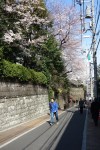
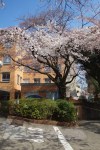
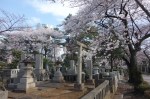
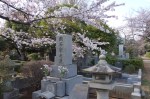
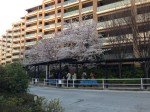
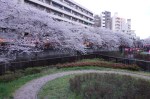
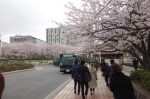
April in Japan is cherry blossom season, and if you didn’t know, the Japanese take this very seriously. See here for proof. ‘Sakura’ are cherry trees, and despite being a huge city, they are all over Tokyo in the usual places like parks, but also tucked away on temple grounds and side streets. When not in bloom they are just nice trees that provide shade but otherwise go unnoticed. But when they bloom, they are bright and beautiful and can be seen from hundreds of yards as they pop out against the monochromatic backdrop of the city.

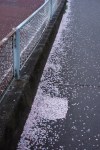
They’re even beautiful as they begin to fade, because the petals fly through the air like snow flurries and build up on the ground in mini ‘drifts.’ Tokyo is unusually clean and other leaves are picked up as soon as they hit the ground. But the cherry blossoms seem to get a pass by virtue of their beauty even in death, often left on the ground for a few days to be admired even as they were before falling.

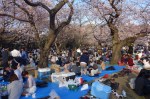
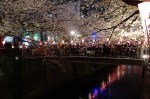
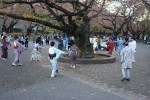
It is traditional for groups of people and even companies to have a ‘Hanami,’ or cherry blossom viewing party. There are photos below that show some of the organized chaos in Yoyogi Park, about a 25 minute walk from the apartment. For company parties the junior employees are sent out early to stake out a good spot under the trees, spread out the tarps, and guard (and/or drink) the beer.

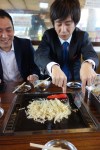
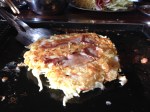
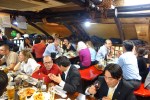
This year Marketo had a Hanami on a boat cruising on the Sumida River that runs through Tokyo. We took a train and a bus to the Northern part of the city, then boarded a long boat with an enclosed area for sitting and eating. You sit on the ground and cook your own ‘Monja’ on propane griddles built into the middle of the tables. There is even the opportunity to drink a beer or five. Very delicious and fun.

Posted in Japan | Tagged , , , , , | Comments Off on Meg’s Photo Post (Cherries!)

Three Nights in Bangkok

With apologies to Murray Head, I’m not so sure about this place. In order to not cause an international incident I can only describe Bangkok as chaos. But not in the orderly, ‘there is a purpose to this’ kind of chaos as there is when crossing the main Shibuya intersection (Shibuya scramble). It’s as if there are no discernible laws, though I’m sure there must be something on the books. So law ‘in theory’ perhaps.

Unlike Tokyo, there are places you really don’t want to go at night and your hand is never far from your wallet. If Japan seems ‘foreign’ at first, Thailand is multiple steps beyond that, in everything from food to customs.

In some regards, Japan is a seemingly secular country. There are Shinto and Buddhist shrines everywhere, but for the most part there are no fanatics. One never sees monks in the street and people visit shrines mostly on traditional holidays. The Shinto and Buddhist religions co-exist peacefully and many people follow both to some extent.

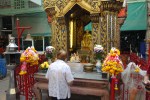
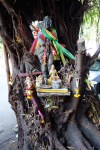
In Thailand there also seems to be two religions; Buddhism and the king, Bhumibol Adulyadej who also goes by the cooler sounding title of Rama IX. Large and small shrines are everywhere you look. Every house and business has a Buddhist shrine either inside or outside or both. And everywhere you look there are posters, billboards, and shrines all featuring the smiling, benevolent countenance of Rama IX. It’s a bit Orwellian, especially considering that I’ve never seen a picture of the Japanese emperor anywhere in Tokyo.

If you’re up for ‘action,’ bars, noise, traffic and ‘different,’ by all means, Bangkok is your kind of place. For me, while very interesting and beautiful in a gritty kind of way, I will cross it off of my ‘been-there-done-that’ list. I’m glad we went, but for my baht, I’ll be returning to Cambodia before Thailand.

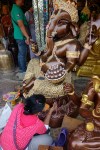
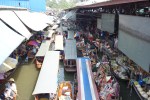
I’ll let the pictures tell the story…

Posted in Japan | Tagged , , | Comments Off on Three Nights in Bangkok

Visitors 2014

Last year passed in a blur, but in many ways it seems like we’ve been here forever (in a good way).

Laurie came for a visit in November and spent Thanksgiving here Tokyo-American style. We joined friends for turkey dinner at the New Sanno Hotel right here in Hiroo. It’s a hotel for American military and DOD personnel, so there are a lot of military families visiting Tokyo on vacation, etc. from bases in the area. When you walk through the doors it’s just like being at home. You can even pay with dollars, not that we have any US cash lying around anymore…

Over Winter break, Matthew came to stay and was joined for a bit by his friend Specht, also his housemate at LMU. Matthew was here during Christmas and we had dinner at the Tokyo American Club complete with Santa and sushi along with turkey and ham.


Posted in Japan | Tagged , , , , , | Comments Off on Visitors 2014

Sundries (Part Two)

Can you tell that this random posting of photos (along with even more random thoughts) is the result of laziness? I didn’t think so. I had some more decent photos and didn’t want to jam them all into one post, so here goes.

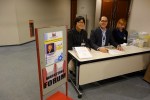
Once again Amy was the featured speaker at an event at Waseda University. The first time she spoke to a class of MBA students about marketing automation and critiqued their case studies that were presented to the class on that same subject. This time she spoke to a broader range of students, educators, and business people about Marketo, and how marketing and sales can work together to drive revenue. After the very nice reception she was off again to yet another meeting of business professionals. She is very busy.

And speaking of Software as a Service (well, it was implied, so this segue kind of works), here are a few thoughts on one of the things that is done properly here; customer service.

The level of service is amazing to behold the moment you set foot in the city, but you tend to get used to it and even take it for granted. I mention this only because I was reminded today of just how good service tends to be here overall. The occasion was getting my drains cleaned. No, that’s not a euphemism for anything other than making sure the drains are in good working order and not clogged up.

About a week ago I was politely corralled by the building receptionist and told that everyone was getting their drains inspected, and she asked if I had any preference for a date and time. I picked a date at 1:30, and assumed that my ‘waiting window’ would start then and last however long. At 1:29 the door bell rang. When I opened it, a young man in overalls stood there holding a clipboard and introduced himself in Japanese with a respectful bow.

He came in, took off his shoes, put on slippers, and proceeded to walk into the apartment holding a blue plastic tarp all rolled up. He set the beginning piece on the floor, stepped on it, and proceeded to unroll it beneath his feet as he walked in the kitchen, making a few neat right angle turns (he’d done it a few times before). He went to three different rooms and inspected and ‘rooted’ three or four drains all in the space of fifteen minutes. His feet never touched the floor the entire time. When he was finished I signed his clipboard. He thanked me, bowed again, and was off to his next appointment, undoubtedly on time.

It’s a silly thing I know, and maybe our apartment has super-efficient service overall (I think they do), but once again there is a level of detail and customer service that is very impressive and unmatched in my experience.

Some photos to follow…I’m writing this on Halloween Eve, and may not publish it for a couple of days just in case I get some scaaaaaary (say that in your best Count Floyd voice) photos of devils and goblins on Halloween night. Halloween is getting very big here for both kids and adults.

Sadly, the day after Halloween as I edit this post at a neighborhood Starbucks, they are piping in almost all Christmas music. A bit early for me, but I’m a Scrooge.


Posted in Japan | Tagged , , , | Comments Off on Sundries (Part Two)

Sundries (Part One)

I say part one only because I have a fair amount of miscellaneous photos with very little overall theme to tie them together. But since you’re ‘there’ and not ‘here,’ I expect photos would be of great interest (pictures, thousand words, etc.).

But before we get to the gallery, a few words (and examples) of the great language divide as told through the humble T-shirt slogan. At the start of a recent Japanese language lesson, my instructor told me she was concerned because she had seen a sign at the train station in both English and Japanese, and that the English translation was terrible.

She realized that most Japanese would not know enough English to care, as the Japanese version was correct. Her concern was more a point of pride. With the Olympics coming to Tokyo in the Summer of 2020, she was concerned that native and proficient English speakers would have a poor view of Japan if they couldn’t even get simple signs translated properly. Indeed, for the past few years there has been an effort to include more English signs in many places, especially public transportation. We have been the unintended beneficiaries of this effort and it is very helpful.

As one wanders the streets in this bustling town, there is a bombardment of signs, logos, loudspeaker announcements, etc., about 99% of it in Japanese. As such, to a non-Japanese speaker, it is a bit like white noise; you see it and hear it, but it tends to just wash over you. On the other hand, when something is printed or spoken in English, it sticks out and tends to be noticed. Enter the lowly T-shirt, the canvas of the masses.

Many of these shirts are standard-issue stuff, logos and slogans from multi-national corporations and fashion houses. It’s hard to mess up ‘Just Do It.’ But others that I have seen have no particular reason to exist that I can discern…they don’t seem to be tied to any particular brand and only serve as adornment or as a fashion statement. They are (supposedly) ‘cool.’ So here is a brief list of some of my favorite T-shirt non sequiters, Tokyo-style (my observations in parentheses…the ‘bad’ words were spelled properly):

– Forcible Pupil
– F#%K CITY (in 12-inch high silver metallic capital letters)
– Time is the rider the break youth
– The Couch Ruined Surfing
– Night cruising pedal
– 11st Monday lovely baby
– I’m fortunate to you and want to be you
– Nomadic collection study in the all from the hearth
– F#%k the Ashley’s  (worn by a middle-aged Japanese woman in ritzy supermarket)
– Climax of a story pink latte lodestar
– What can only ‘HL’ done now

I have no idea what any of it is supposed to mean, but to the wearer it probably makes about as much sense as my horribly mangled Japanese (although I am awesome at asking where the bus/train goes).

On to the pix…more in part two…


Posted in Japan, Uncategorized | Tagged , , , , , | Comments Off on Sundries (Part One)

Learning the Lingo: You May Already Speak Japanese…

…sort of. OK, I’ll be the millionth to say it, Japanese is a difficult language to learn. To start with, there are three different ‘alphabets’ that are used interchangeably in sentences. I won’t go into too much detail, but there is more info here.

Fortunately, to make my life a bit easier, I have been mostly focused on spoken Japanese, which is hard enough, but with practice you can become fluent in the important things like figuring out where the bus goes or ordering beer.

The thing that stood out from the beginning is the various ways of counting ‘things’ in Japanese. In English, numbers are numbers, whether it’s stamps, apples, umbrellas, etc. Two stamps, two apples, two umbrellas. Not so here, that would be too easy. In Japanese, things are counted depending upon what type of thing it is. Counting people uses a different counting system than the one used for things that are flat (stamps, paper, shirts). There is another system for things that are long and thin (umbrellas, bottles), and yet another for things that don’t fit any other category (apples, hamburgers).

Two stamps (flat) are ‘ni-mai’ (kitte). Two umbrellas (long and thin) are ‘ni-hon’ (kasa). Two apples (generic) are ‘futatsu’ (ringo). Two people are ‘futari’ (hito). The good news? The noun itself does not change wether it’s singular or plural. Also, there are no definite articles to speak of…it is just ‘apple,’ not ‘the apple’ or ‘an apple.’

But despite the complexity, there are times when Japanese and English overlap. I think there are a couple of reasons for this. The first is that Japan is enamored with American pop culture and sports (especially baseball). The other reason is that many ‘modern’ or ‘foreign’ inventions (modern by the standards of a culture that is very old) are not given ‘native’ Japanese words to describe them.

The easiest example (but contradictory in a way, like many things here) is the thing we walk through many times each day; the door. I say contradictory because ‘doors’ have been around for thousand of years, so one would think that there is a common Japanese word for them and there is. But that word, ‘shoji,’ describes the traditional sliding door made out of a wood frame with paper panels.

The everyday term that is used is ‘doa.’ It is pronounced as ‘doe-ah.’ When I asked the reason why ‘doa’ is used, I was told that the type of door that we are used to, the kind that swings on hinges, is considered a modern and foreign invention. The contradictory part is that the disembodied ladies voice that you hear when riding the elevator (there is almost always an audible confirmation of floor number, door opening, etc.) also uses the term ‘doa’ even though elevator doors slide!

The maddening part is that this pattern is far from consistent. For instance, one would think that the cell phone, being a modern invention, would take on the Japanese version of the English word. Not so. The word for cell phone is ‘keitai’ (kay-tie). The word for a home telephone is ‘denwa.’ Go figure.

So here is a brief list of words that, when pronounced properly, will be understood in Japan:

— Depato (day pah toe) Department Store

— Enjinia (en jin ee ah) Engineer

— Meru-adoresu (may ru add o re sue) Email address

— Supa (sue pa) Supermarket

— Furonto (fu ron toe) Front desk (hotel)

— Hoteru (ho tay rue) Hotel

— Rajio (rah gee oh) Radio

— CD-pureya (CD poo ray ah) CD player

— T-shatsu (T shot sue) T-shirt

— Hotto kohi (hot toe koe hee) Hot coffee

— Taoru (tao rue) Towel

— Teburu (tay boo rue) Table

— Takushi (talk u she) Taxi

— Chekkuin-kaunta (check u in cow un tah) Check in counter

— Gorufu (go rue fu) Golf

— Bagen-seru (bah gen say rue) Bargain (clearance) sale

The last one is my favorite. So that’s a brief journey into the hybrid language that you too can learn to speak.

Here are a few random photos to cap off the post.

Posted in Japan | Tagged , , , | Comments Off on Learning the Lingo: You May Already Speak Japanese…